
Expat Child Syndrome: What It Is, and What Actually Helps
Parents move for a job. Children are moved — and they lose every friend, routine and familiar place at once. The distress that follows has a name, a recognisable shape by age, and a set of responses that work better than waiting it out.
In the households we relocate, the adults have generally chosen the move and the children have not. That asymmetry is the whole subject. Expat child syndrome — ECS — describes the emotional and psychological difficulty a child can face after moving abroad: grief, anxiety, a sense of lost identity, changes in behaviour. It is not a clinical diagnosis, and it is important to be precise about that. It is a pattern widely recognised by educators, expatriate support networks and psychologists, and it is common enough that treating it as normal rather than exceptional is the most useful thing a parent can do. It shows up most in children roughly between 7 and 15, when friendships and social identity are doing the heavy work of growing up.
On this page
01What ECS is — and is not
A child who moves country loses their entire social world in a single week. Not gradually, the way a friendship fades, but at once: the friends, the classroom, the walk home, the food, the language on the street, the place they were good at things. Adults tend to underestimate this because they keep their own continuity — the same job, the same partner, the same competence.
What follows can look like grief, low mood, anxiety, anger at the parents, or a flat refusal to engage with the new place. ECS is not a clinical disorder and should not be treated as a diagnosis. It is a description of a common reaction, and the reason the label is useful is simply that it tells a worried parent this is expected rather than a sign that something is wrong with their child.
⚠ When to involve a professional
Nothing in this guide replaces qualified help. If low mood, withdrawal or physical symptoms persist for more than a few weeks, or if you see any indication of self-harm, speak to the school counsellor and to a psychologist. International schools in the region generally have counselling staff, and using them early is not an overreaction.
02How it differs by age
The same move produces different symptoms depending on where the child is developmentally. Knowing which pattern to expect stops parents misreading it as naughtiness or laziness.
| Age | How it usually shows | What is really happening |
|---|---|---|
| 3–6 | Clinginess, separation anxiety, regression in toilet habits | Too young to articulate the loss, so it comes out through the body and through attachment |
| 7–12 | Emotional outbursts, vocal homesickness, refusing to make new friends | Loyalty. Making friends here can feel like betraying the friends left behind |
| 13–18 | Identity confusion, resentment towards parents, anxiety about fitting in socially and academically | The move lands exactly where identity is being built, and it was not their decision |
Teenagers are the hardest group and the one most often handled as a discipline problem. The resentment is rational: they had a life and it was ended by someone else's career. Treating that as legitimate rather than ungrateful is usually the turning point — a theme we go into further in our guide to relocating with teenagers.
03The warning signs
Most of these look like ordinary bad days in isolation. It is the persistence and the clustering that matter.
- Retreat into screens — or into the bedroom, and a reluctance to leave the house at all.
- Emotional outbursts, or sudden silence. Either direction is a signal; the change is what counts.
- Physical complaints before school — stomach aches, headaches, that resolve once staying home is agreed.
- Fixation on the old life — repetitive nostalgia, constant contact with former friends to the exclusion of new ones.
- The phrases themselves — “I hate it here”, “I want to go home”, repeated rather than said once in anger.
The school is where most of this is first visible, which is why the choice of school does more for a child's adjustment than any other single decision. A counselling team that takes the transition seriously, and a cohort where a newcomer is not unusual, matter more than the facilities — something worth weighing during the school search, while you still have a choice.
04Three families, three fixes
What strikes us across the region is that the successful responses are rarely therapeutic in the formal sense. They are practical, and they give the child something to do rather than something to feel.
01
Manila — the culture gap inside an English-speaking school
A British family's ten-year-old struggled even though lessons were in English: a more relaxed approach to punctuality and unfamiliar religious celebrations left her lost. The school counsellor used art to give her a way to say so, and weekend trips around the city gave her some ownership of the place.
02
Chiang Mai — corrected for behaviour they thought was normal
Two Canadian teenagers withdrew after being pulled up for displays of affection that were unremarkable at home. Being corrected made them feel conspicuous, so they stopped engaging. A Muay Thai class fixed it: bonding through physical activity needs almost no language.
03
Ho Chi Minh City — the unstructured moments were the problem
An eight-year-old began wetting the bed after the move. His international programme was fine; it was the loud, large, unstructured times — lunch breaks — that excluded him. A school buddy system paired him with another English speaker, and weekend playdates did the rest.
The common thread
In all three cases the trigger was social, not academic, and the fix was structural rather than emotional: a buddy, a class, a project. Unstructured time is where a new child is most alone — so that is where to intervene.
05What parents can do
Five habits do most of the work, and none of them requires a specialist.
- Allow the grief. Name the loss out loud instead of reframing it as an adventure. A child who is told they should be excited learns to hide the problem.
- Build one fixed routine. A Saturday pancake breakfast is not trivial — a single predictable thing anchors a week in which everything else is unfamiliar.
- Let them own their room. Their objects, their arrangement. It is the one space they control in a country they did not choose.
- Introduce the new place in small doses. A market, a temple, a language app — curiosity in manageable portions, not immersion.
- Keep the traditions from home. Holidays, recipes, bedtime stories. Continuity is what makes change survivable.
Beyond the household, build a network deliberately: parent groups on social platforms exist for every major expatriate city in the region, along with meet-up parenting events, sports leagues, art workshops, libraries and embassy resources. And be honest about the parental factor — in the first months the adults are consumed by work and logistics, and children read that absence as one more loss. Structured cultural support helps here, which is what our cultural orientation programme is for: it treats adaptation as something you prepare rather than something you hope for.
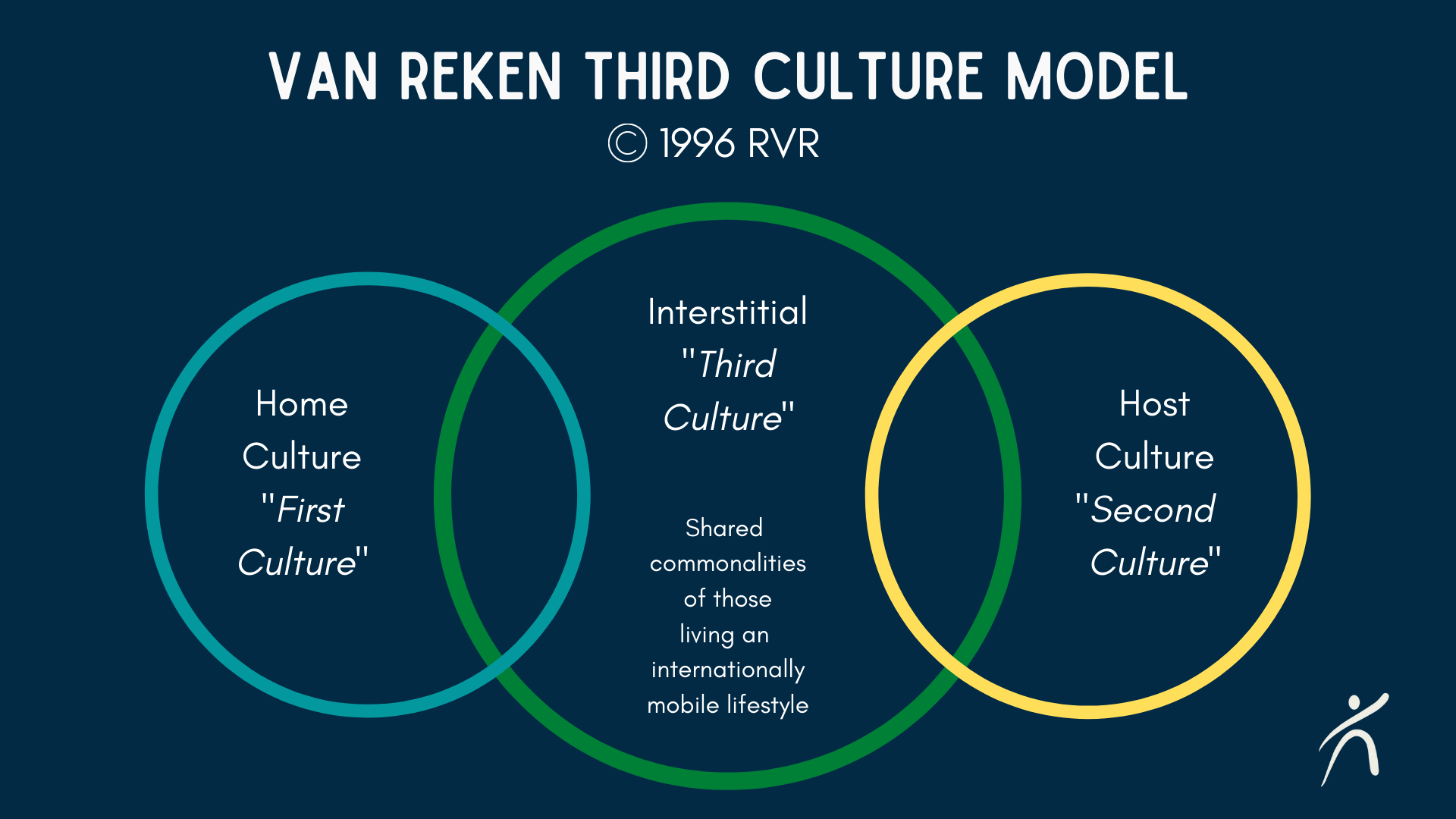
06Third Culture Kids, later on
A child who grows up in a culture that is neither their parents' nor their passport country's becomes what is usually called a Third Culture Kid. They tend to be adaptable, often multilingual, and genuinely at ease across cultures — the upside is real and it lasts.
The complication arrives later and in an unexpected direction: many TCKs find returning harder than leaving. The passport country turns out to be the place they fit least well, and the reverse culture shock nobody warned them about is the one that hurts.
⚠ One widely quoted figure, and why we date it
A 2010 survey by Denizen, a magazine for Third Culture Kids, reported that 81% of respondents felt more connected to other global citizens than to their country of origin. It is quoted constantly — but it is a magazine survey, it is now sixteen years old, and it should be read as an indication of a real phenomenon rather than a current statistic.
The practical implication for parents is to keep the passport country a living relationship rather than an abstraction: visits, language, family contact, some sense of the place as somewhere real. It costs little during the posting and it removes a large problem at the end of it. The financial side of long postings is its own planning exercise, which we set out in our guide to the hidden costs of relocating to Southeast Asia.
07Common questions
Is expat child syndrome a real medical condition?
No. It is not a clinical disorder and it is not a diagnosis. It is a descriptive term, widely used by educators, psychologists and expatriate support networks, for the emotional and psychological difficulty a child can experience after moving abroad. Its usefulness is in normalising a common reaction, not in labelling a child.
What age is most affected?
Roughly 7 to 15, when friendships and social identity matter most. Younger children aged 3 to 6 tend to show clinginess, separation anxiety or regression in toilet habits, while teenagers of 13 to 18 more often show identity confusion and resentment towards their parents for a decision that was not theirs.
How long does the adjustment take?
Finding real friendships commonly takes months rather than weeks, and that gap is when children feel most alone. If low mood, withdrawal or physical symptoms persist beyond a few weeks, involve the school counsellor and a psychologist rather than waiting it out.
What helps most in the first weeks?
Structure rather than reassurance. A buddy at school, an activity where language matters little such as a sport, one fixed family routine, and letting the child arrange their own room. In the three cases we describe, the trigger was social and the fix was practical — not a conversation about feelings.
Does an English-speaking school prevent the problem?
No. One of the clearest cases we have seen involved a child in an English-speaking international school who struggled with local norms around punctuality and unfamiliar religious celebrations. Shared language removes one barrier; it does not remove the cultural gap or the loss of the old social world.
What is a Third Culture Kid?
A child who spends a formative part of childhood in a culture that is neither their parents' nor their passport country's, and whose identity forms around that blend. They are typically adaptable, often multilingual and comfortable across cultures — but many find returning to their passport country harder than leaving it.
Moving with children?
Tell us their ages and where you are heading, and we will set out what to put in place before arrival — school, activities and cultural preparation. Ask about family support →