
Best Expat Destinations 2026: Where People Are Actually Going
Nine countries, weighed on the four things that decide whether a move works — cost, healthcare, visa route and community. We are candid about which three we know first-hand and which we do not.
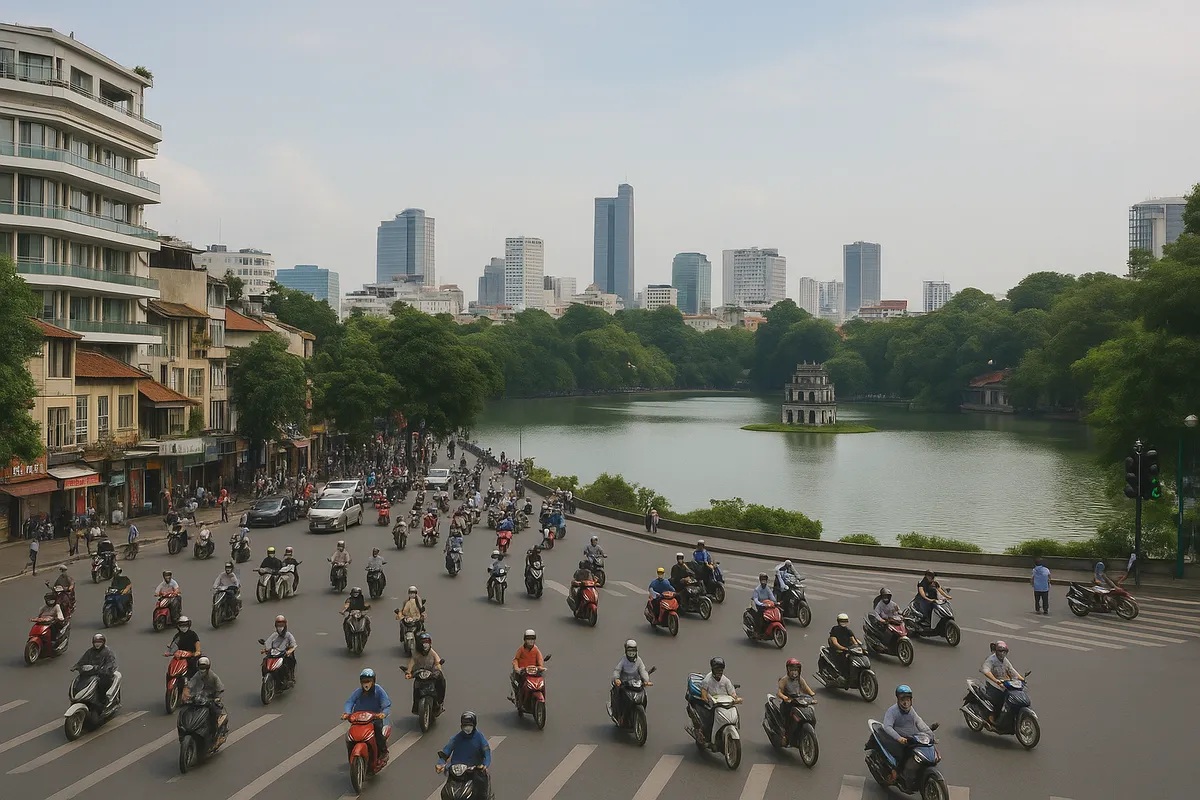
Every list of the best expat destinations 2026 has the same weakness: it ranks countries as though everyone wanted the same things. In practice a retiree, a family with school-age children and a thirty-year-old working remotely are shopping for entirely different products, and a country that is excellent for one is a poor fit for another. So this guide does two things instead. It groups destinations by the kind of life they actually deliver, and it is explicit about where our knowledge is first-hand — we run our own teams in Thailand, Vietnam and the Philippines, and everywhere else we are reporting rather than operating.
On this page
01What changed in how people choose
Three shifts have reshaped this decision, and none of them is about salary.
- The visa stopped being the constraint. Long-stay routes for remote workers now exist in enough countries that the question is no longer “where will they let me live” but “where do I want to”.
- Asia's position hardened. Vietnam and Thailand lead on the combination of cost and opportunity, and they are no longer treated as emerging options but as established ones.
- Lifestyle overtook advancement. Health, sustainability and community now decide more moves than promotion does — which is why Portugal and Costa Rica keep appearing alongside financial centres.
On the evidence side, the most quoted source is InterNations' Expat Insider survey, whose 2025 edition placed Vietnam fifth in the world. It is worth understanding what that is: a large opinion survey of the network's own members, not an official index. Useful as a signal of sentiment, not as a measurement — and sentiment is exactly what a destination list is about.
⚠ The number that decides it is not on any list
Cost-of-living indices compare rent and groceries. What breaks budgets is school fees, insurance premiums, deposits and visa renewals — none of which appear in the headline comparison. We set out the real ranges in our guide to the hidden costs of relocating to Southeast Asia. Read a destination list against that, not instead of it.
02Southeast Asia, first-hand
These are the three we operate in, with our own consultants and our own offices, and the only three where what follows comes from placing households rather than from reading about them.
| Country | Suits | What it genuinely offers | The honest trade-off |
|---|---|---|---|
| Thailand | Retirees, remote workers, families | Two very different lives in one country: Bangkok's opportunity and pace, or Chiang Mai's slower rhythm an hour's flight away. Private healthcare with a strong regional reputation, islands within reach for weekends. | The deepest housing market of the three, and the most expensive schooling. |
| Vietnam | Entrepreneurs, remote workers, young families | The lowest costs of the three against rising opportunity. Ho Chi Minh City's energy and coworking density, or Hanoi's more traditional rhythm and colonial-era streets. A young, optimistic population that expatriates repeatedly cite as the draw. | The market moves fast — advice a year old is often out of date. |
| Philippines | Retirees, corporate professionals, families | English is spoken everywhere, which removes the single biggest daily friction in the region. Manila for multinationals, NGOs and embassies; Cebu and Davao for space and a slower pace. Retirement visa routes with a strong regional reputation. | An archipelago of some 7,600 islands: internal travel is a flight, not a drive. |
Asia Relocation has been on the ground here since 2011, and the pattern we see is consistent: people arrive for the arithmetic and stay for something else. Thailand converts holidaymakers into residents more often than any other country we work in. Vietnam attracts people who want to build something. The Philippines wins on the thing nobody puts in a spreadsheet — how quickly a stranger stops feeling like one.

03The European coast
Portugal has become Europe's default answer for anyone who wants the continent without its cost. Lisbon and Porto draw professionals and creatives; the Algarve remains largely a retirement coast. The appeal is a combination rather than a single feature — affordability by Western European standards, personal safety, accessible healthcare and established international schools.
Spain is chosen for the life rather than the job. Barcelona's cosmopolitanism, Madrid's density of history and Valencia's coast are three genuinely different propositions, and the country's real draw is a culture that treats family time and leisure as non-negotiable rather than aspirational. Both countries share the European advantage that matters most in practice: strong public healthcare and schooling you do not have to buy privately.
On the countries we do not operate in
Portugal, Spain, Mexico, Costa Rica, the UAE and Canada are outside our own network — we move households to and from Southeast Asia rather than within Europe or the Americas. For destination-specific detail on those, our country guides go further than this overview can.
04The Americas
Mexico offers more variety than any other country on this list. Mexico City is a genuine global capital; Playa del Carmen and Puerto Vallarta are coastal and unhurried. Affordability is the headline, but the real draw is cultural density — festivals, music, art and food that make ordinary weeks interesting. For North Americans there is a decisive practical advantage: proximity. Staying close to family while living differently is a combination few destinations offer.
Costa Rica attracts a specific person. Conversations here are about lifestyle rather than career: rainforest, volcanoes, beaches, and a national temperament — pura vida — that people move towards deliberately. Healthcare is solid and communities are welcoming. It suits those stepping off a high-pressure track rather than those still climbing one, and it is honest to say so.
05The Gulf and the north
The United Arab Emirates remains the destination of choice for career-focused expatriates. Dubai and Abu Dhabi concentrate finance, engineering, healthcare and technology, with tax advantages, modern infrastructure and high living standards. The pace is intense and few treat it as permanent — but a posting of a few years can reshape both finances and a CV for a decade afterwards.
Canada is at the opposite end of that spectrum: chosen for permanence. Structured immigration programmes make it one of the few destinations where the path to staying is legible from the outset, and the multicultural norm means newcomers are unremarkable. Toronto and Vancouver offer international careers; smaller cities offer calmer lives at lower cost. With strong public healthcare, education and safety, it is the list's clearest choice for people intending to put down roots rather than take a posting.
4
The only questions that matter
What it costs to live the way you intend to. Whether healthcare works for your household. Whether a visa route fits your situation. And whether you will find people. Everything else is detail.
06How to actually choose
Rankings are a poor tool for a personal decision. This sequence works better, and it is the order we take clients through.
01
Start with the visa, not the country
Work out which routes you actually qualify for given your age, income, employment and family. That single filter usually removes half the list before you have compared anything else.
02
Cost it on your own line items
Not on an index. School fees per child, insurance at your age, the deposit, the annual renewal. A country that looks cheap in aggregate can be the dearest for your particular household.
03
Test healthcare against your reality
Not the country's reputation, but the specific facility you would use, whether your condition is covered, and what a policy costs at your age. This is where retirement plans most often fail.
04
Visit in the worst month
Rainy season, not high season. Anyone can enjoy a place at its best; you are deciding whether you can live in it at its least appealing.
If Southeast Asia is on your shortlist, we can shorten that process considerably, because we are not comparing brochures — we have consultants in all three countries. Our destination services team handles the arrival end, and a home search is usually where an abstract decision becomes a concrete one.
Narrowing it down to one?
Tell us your situation — household, budget, timing, what the move is for — and we will tell you which of the three Asian options fits, and when the answer is none of them. Request a relocation consultation →
07Common questions
Which country is the best destination for expats in 2026?
There is no single answer, because a retiree, a family with school-age children and a remote worker are choosing different things. Vietnam and Thailand lead on cost against opportunity, Portugal and Costa Rica on lifestyle, the UAE on career and earnings, and Canada on permanence. Filter by visa eligibility first, then cost your own line items.
Where does Vietnam rank among expat destinations?
InterNations' Expat Insider 2025 survey placed Vietnam fifth in the world. It is worth reading that for what it is: a large opinion survey of the network's own members rather than an official index. It reflects sentiment, and on cost against opportunity that sentiment matches what we see on the ground.
Which Southeast Asian country is easiest for English speakers?
The Philippines. English is spoken widely across the country, which removes the largest source of daily friction — dealing with landlords, schools, hospitals and officials. Thailand and Vietnam both have substantial English-speaking layers in their major cities, but not the same everyday reach.
What should I check before committing to a country?
Four things, in order: which visa routes you actually qualify for, what your own cost lines total rather than an index average, whether healthcare covers your household at your age, and whether you will find a community. Then visit in the least appealing month rather than the high season.
Is Southeast Asia still cheaper than Europe?
On rent and daily living, generally yes. On the costs that break budgets, not always: international school fees in the region can exceed European private schooling, and health insurance is a fully private expense where Portugal or Spain offer strong public systems. Compare the whole picture rather than the rent.
Which of these countries does Asia Relocation operate in?
Thailand, Vietnam and the Philippines, with our own offices and consultants in each, and we have been in the region since 2011. For Portugal, Spain, Mexico, Costa Rica, the UAE and Canada we can handle the departure from Asia, but we do not operate local teams there and we say so rather than implying otherwise.