
Vintage Car Import to Thailand: What the 45% Excise Duty Changes
For six years, bringing a classic car into Thailand was effectively impossible. A revised excise rate reopens the door — with a 30-year threshold, a weekend-only rule, and a landed cost that still needs budgeting properly.
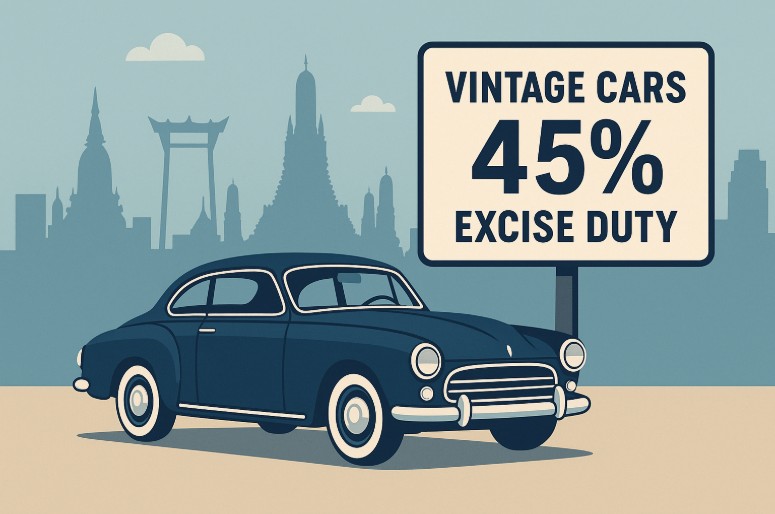
Every year we are asked the same question by someone posted to Bangkok: can I bring the car? Until recently the honest answer was no. Thailand shut personal vehicle imports in 2019, and the duty stack on anything that did get through ran past 200% — a rate that functions as a ban rather than a tax. That has changed for one specific category. Vintage car import to Thailand now carries a 45% excise duty, and for the first time in years the sums are worth doing. This guide sets out who qualifies, what the restrictions actually are, and where the remaining costs sit. If what you need is the shipping itself rather than the duty question, that is our Thailand vehicle transport service.
On this page
01What actually changed
Thailand's Excise Department has set a dedicated rate for imported vintage vehicles: 45%, applying from fiscal year 2026. Set against the 200%-plus that applied before, that is not a tweak — it is the difference between an idea and a plan.
45%
Key figure
Excise duty on imported vintage vehicles from FY2026, down from over 200%. Substantial, but no longer prohibitive.
Three things sit alongside the rate, and each one changes who this is for:
- It is an exception, not a reopening. The 2019 restrictions on personal vehicle imports stand. This creates one narrow category alongside them — a modern car is still not coming with you.
- Cars already here are untouched. Classic cars and motorcycles registered in Thailand before the measure takes effect keep their existing status. Nothing to do if you already own one locally.
- The vehicle is restricted once it lands. Weekends and public holidays only, unless you obtain permission. This is the provision most people miss until too late — see section 03.
The reasoning is openly economic. The Excise Department expects the measure to raise somewhere between one and two billion baht a year, to draw collector events and exhibitions to Thailand, and to give the domestic restoration trade something to work on. Read that as a signal of intent: this is a category the government wants to exist, which makes it a reasonably safe thing to plan around.
⚠ Confirm the commencement date before you ship
Thailand's fiscal year runs from 1 October to 30 September, so “fiscal year 2026” and the calendar year are not the same window. Excise measures also arrive through subordinate regulation, which can carry conditions the headline rate does not mention. Confirm the wording in force on the day your vehicle is declared — not the day you booked the shipping.
02Does your car qualify?
The test is age, and the threshold is 30 years or older. That is the whole of the eligibility gate as published — there is no marque list, no rarity criterion, no minimum value. A 1994 saloon in ordinary condition meets the same bar as a concours-standard sports car from the sixties.
In practice, two things decide whether the file succeeds rather than the age alone. The first is that the paperwork must agree with itself: chassis and engine numbers on the title, the bill of lading and the valuation report all need to match, and a discrepancy sends the declaration back. The second is valuation. Duty is assessed on a value, and a classic car has no list price — so the supporting evidence you provide is what the assessment rests on. A vehicle with thin documentation gets valued conservatively, which rarely works in your favour.
Good to know
Assemble the history file before you book anything: title and registration, purchase evidence, restoration invoices, and photographs of the numbers as they physically appear on the car. This is the cheapest work in the whole process and it carries the most weight.
03The weekend-only rule
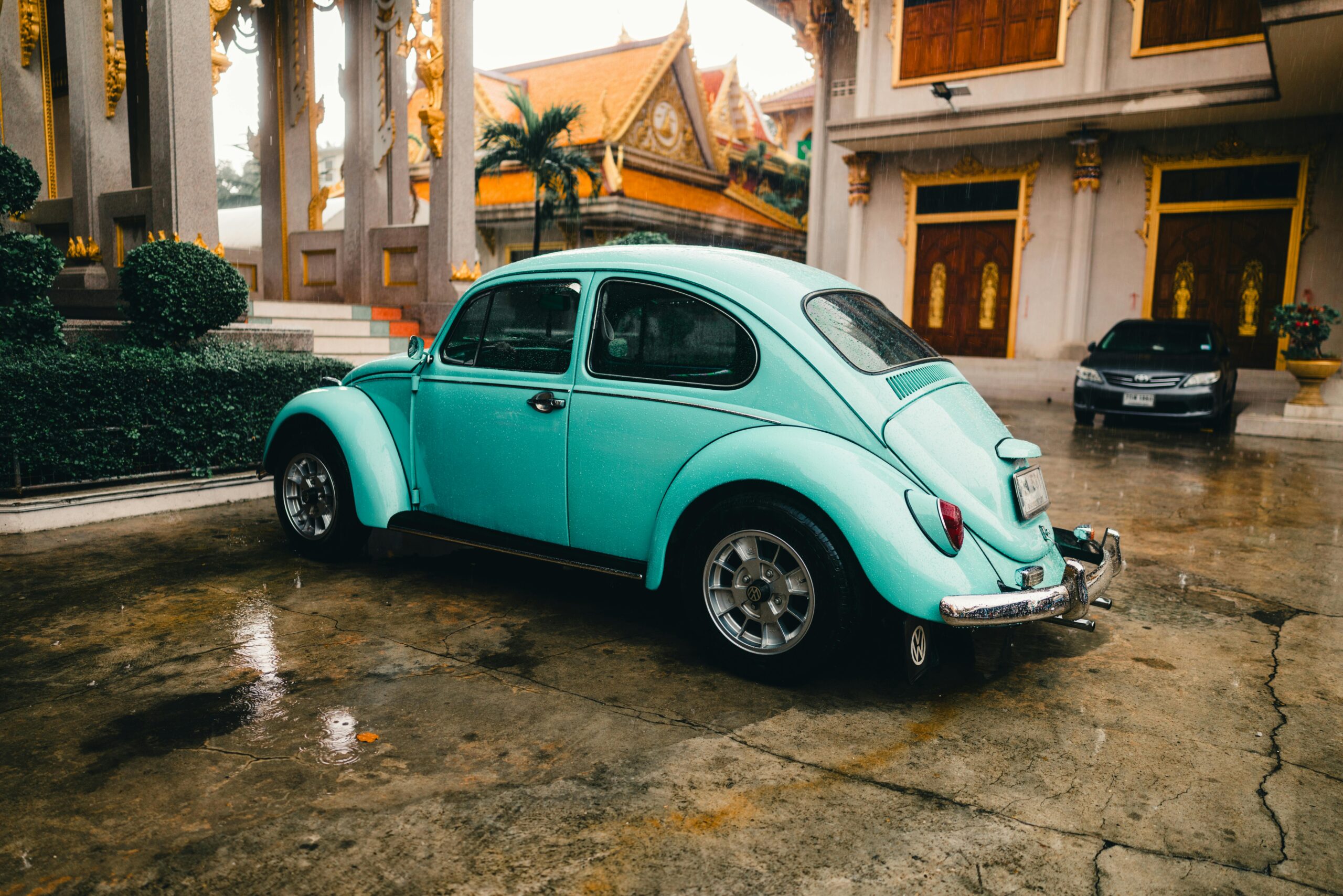
An imported vintage vehicle may be driven on weekends and public holidays. Outside those days it stays parked, unless you apply for and receive specific permission. Treat that permission as possible rather than probable, and budget your plans on the base rule.
This is a genuine constraint, not a formality, and it should decide whether you import at all. If the plan was a characterful daily driver, this policy does not deliver it — you will need a second, modern car for the working week, which is a second set of running costs. If the plan was a car for Sundays, for club events and for keeping something you were not prepared to sell, the rule costs you very little.
One practical consequence
Thailand observes a generous public holiday calendar, and long weekends cluster around Songkran and the year-end. A weekend-and-holidays entitlement is a broader permission here than the same wording would give you in Europe — worth factoring in before you write the idea off.
04What it costs beyond the duty
The 45% is the headline, not the invoice. A realistic landed cost has several layers, and the excise duty is only the largest of them.
| Cost | What drives it | Type |
|---|---|---|
| Excise duty | 45% of the assessed value from FY2026 | Confirmed rate |
| Other import charges | Assessed by Customs alongside excise; depends on the declaration | To quote |
| Ocean freight | Origin port, and whether the car travels in a dedicated container | Quotable |
| Marine insurance | Declared value — and for a classic, agreed value beats market value | Quotable |
| Valuation report | Independent assessment supporting the declared value | Fixed |
| Port handling & registration | Terminal charges, inspection, Thai plates | Fixed |
Two of these deserve more attention than they usually get. Insure on an agreed value, because the market value of a 40-year-old car is exactly the argument you do not want to be having after a claim. And ship in a dedicated container rather than sharing — the cost difference is far smaller than the risk it removes.
05How the import runs
Start three to six months before you want the car in Thailand. That is not padding: the valuation and the sailing schedule are the two items you cannot compress, and they sit at opposite ends of the process.
01
Eligibility & valuation
Confirm the 30-year threshold on the registration document, then commission the valuation report. Everything downstream is assessed against this figure.
02
Duty estimate
Have the excise and import charges estimated on that value before committing to freight. This is the decision point — and where some owners conclude the numbers do not work.
03
Shipping & documents
Book the sailing, prepare the bill of lading and the history file, and insure on agreed value. Our guide to shipping a car abroad covers what happens at each end.
04
Clearance, plates, permission
Clear the vehicle, register it and obtain Thai plates — then, if you need weekday use, file that application separately. Do not assume it travels with the import.
One route is worth checking if your move is corporate. Companies operating under Board of Investment promotion may hold privileges that extend to vehicle imports, depending on the investment category. It is not a general expat entitlement and it will not apply to most private moves — but if your employer is BOI-promoted, it costs nothing to ask before you pay a private duty bill. The current procedural requirements sit with Thai Customs.
06Common questions
What our Bangkok team is asked most since the rate was announced.
How old must a car be to qualify as vintage in Thailand?
Thirty years or older. That is the published threshold and it is the whole eligibility test — there is no marque list, rarity requirement or minimum value. Confirm the age against the registration document rather than the model year, as the two do not always agree.
Can I drive an imported vintage car in Thailand every day?
No. Imported vintage vehicles may be used on weekends and public holidays only, unless you apply for and are granted specific permission. Plan on the base rule and keep a modern car for the working week, because that permission is possible rather than automatic.
Does the 45% rate apply to a normal car?
No. Thailand's 2019 restrictions on importing personal vehicles remain in force, and the 45% excise duty applies only to the vintage category. A recent car is still not something you can bring with your household goods.
What happens to a classic car already registered in Thailand?
Nothing. Classic cars and motorcycles registered in Thailand before the measure takes effect keep their existing status and are not affected by the new rate. The change concerns vehicles being imported, not vehicles already here.
How long does the whole process take?
Allow three to six months from decision to plates. The two steps that cannot be compressed are the independent valuation, which the duty assessment depends on, and the sailing schedule from your origin port. Registration and any weekday-use application come after arrival.
Is 45% the total cost of importing the car?
No — it is the excise duty on the assessed value. On top of it sit the other charges Customs assesses on the declaration, ocean freight, marine insurance, the valuation report, port handling, inspection and Thai registration. Get the duty estimated on your actual valuation before you book freight.
If you are weighing this up as part of a wider move, the vehicle is rarely the hard part — it is the sequencing against your household shipment and your arrival date. Our Thailand moving team handles both in one file, so the car is not a separate project running in parallel.
Thinking of bringing the car?
Send us the year, the model and the origin port and we will come back with an estimate of the landed cost — before you commit to anything. Ask about shipping your vehicle →