Holy Week in the Philippines is not just a religious event. It is a nationwide pause that affects daily life, administration, mobility, and services across the country. For expatriates, families, and newly arrived residents, understanding how Holy Week works is essential to avoid disruption and unnecessary stress.
This article explains what Holy Week really means in the Philippines, how it impacts everyday life, and how to prepare in a practical, realistic way.
Understanding Holy Week in the Philippine Context
Holy Week (“Semana Santa”) is one of the most important cultural and religious periods in the Philippines. As a predominantly Catholic country, the Philippines observes Holy Week with a level of intensity that surprises many foreigners.
Unlike in many Western countries where Easter may involve only a few public holidays, Holy Week in the Philippines reshapes the rhythm of the entire nation.
From Palm Sunday to Easter Sunday, religious observance, family traditions, and public behavior follow long-established customs that directly influence transportation, business operations, and public services.
Key Dates and What They Mean
Understanding the timeline is crucial, especially for expatriates managing work schedules, travel, or administrative tasks.
Palm Sunday
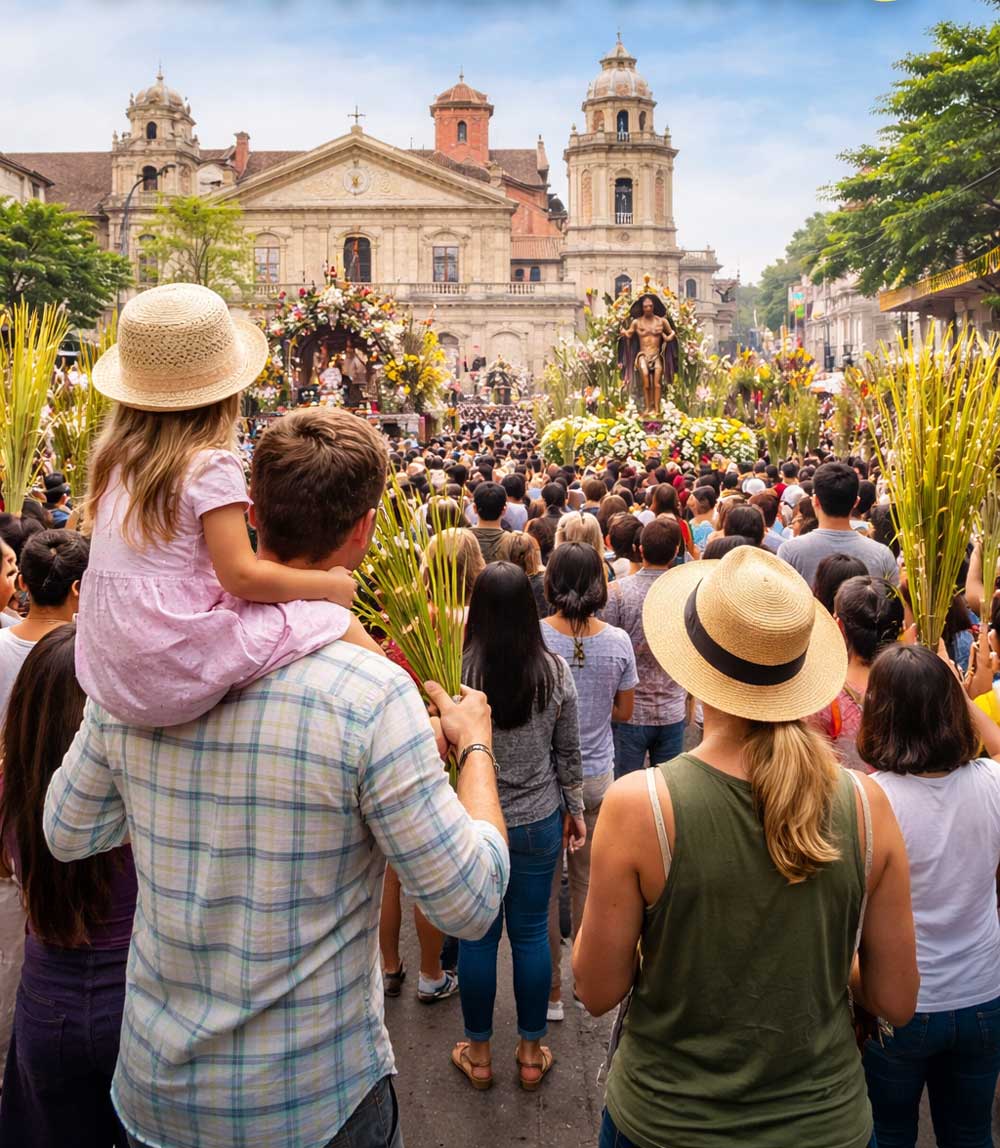
Marks the beginning of Holy Week. Churches are crowded, and religious processions begin. Daily life remains mostly normal, but weekends already see heavier traffic around churches.
Maundy Thursday (Public Holiday)
Many businesses close or operate on reduced hours. Government offices, banks, and some clinics are closed. Roads begin to empty as families travel to their provinces.
Good Friday (Public Holiday)
This is the most solemn day of the week. Most businesses are closed. Public transport is extremely limited. Television and radio programming change significantly, with entertainment content largely suspended.
Black Saturday
A transitional day. Some shops reopen slowly, but many businesses remain closed until Sunday or Monday.
Easter Sunday
Celebratory and family-oriented. Commercial activity gradually resumes, but some services may still operate at reduced capacity.
How Holy Week Affects Daily Life for Expats
Business and Administration
During Maundy Thursday and Good Friday:
Government offices are closed
Immigration offices do not operate
Banks and notaries are unavailable
Many private companies shut down completely
For expatriates, this means:
Visa applications and renewals cannot be processed
Document signings may be delayed
Administrative timelines must be adjusted in advance
This period should never be used to plan critical legal or administrative steps.
Transportation and Mobility
Holy Week is one of the busiest travel periods of the year.
What to expect:
Massive outbound traffic from Metro Manila
Fully booked flights, buses, and ferries
Limited public transport on Good Friday
Ride-hailing services operating with fewer drivers
For expatriates:
Inter-island travel becomes complex
Airport access may be slower despite lighter city traffic
Emergency transport options are reduced
If you are newly arrived, it is strongly recommended to avoid travel during Holy Week unless absolutely necessary.
Shops, Restaurants, and Services
Availability varies greatly depending on location.
Large malls may close on Good Friday
Convenience stores usually remain open but with reduced staff
Restaurants close or operate with shortened menus
Alcohol sales may be restricted in some areas
In residential neighborhoods, silence is common, particularly on Good Friday afternoon.
Religious Practices You May Encounter
Holy Week observance in the Philippines is deeply emotional and highly visible.
Processions and Church Activities
Expect:
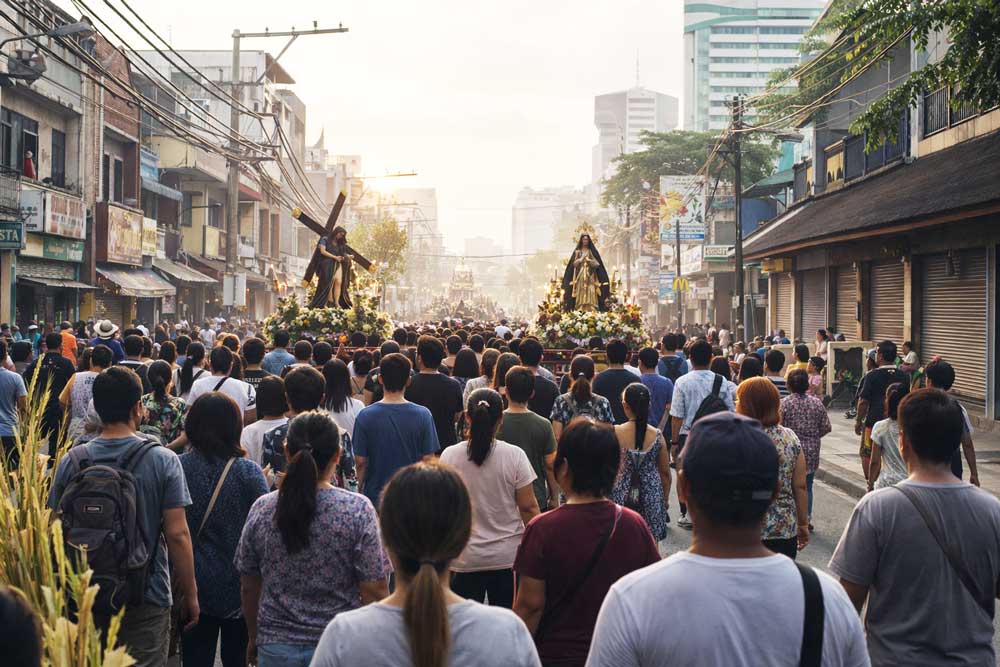
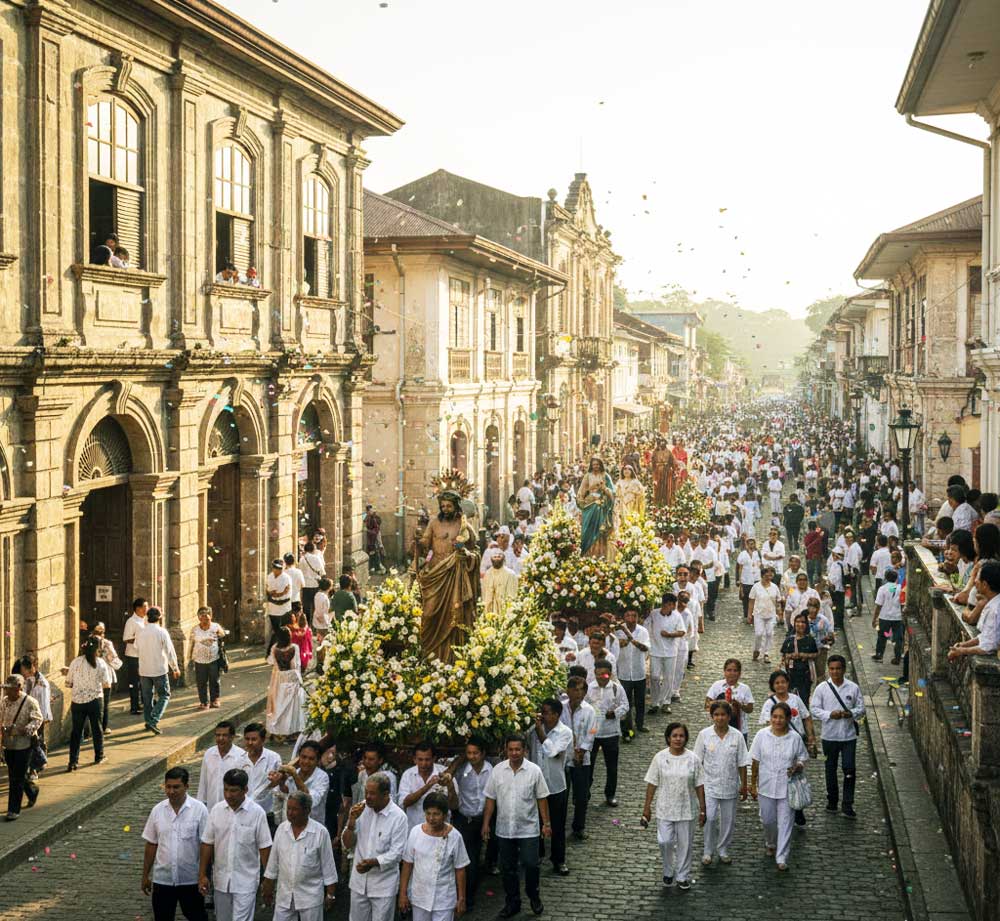
Long religious processions in cities and provinces
Streets temporarily closed
Public displays of prayer and devotion
Acts of Penance
In certain provinces, extreme acts such as self-flagellation still occur. While these are localized and increasingly regulated, they can be distressing if encountered unexpectedly.
Expatriates are not expected to participate, but respectful behavior is essential.
Finalize administrative matters at least one week in advance
Stock basic groceries and medication
Confirm work-from-home arrangements if applicable
Avoid scheduling arrivals, departures, or moves
During Holy Week
Limit non-essential travel
Expect slower response times from service providers
Plan quiet, local activities
Use the time for rest and family routines
After Easter
Expect backlog in government offices
Resume processes mid-week for smoother handling
Anticipate a gradual return to normal operations
Holy Week and Relocation Timelines
For families relocating to the Philippines, Holy Week should be treated as a blackout period for:
Arrivals requiring immediate settling-in support
School visits and enrollments
Lease negotiations
Administrative onboarding
Experienced relocation planning always factors this period in advance.
A Moment to Pause
Beyond logistics, Holy Week offers something rare: a collective pause.
For many expatriates, it becomes a moment to:
Observe Filipino family culture
Understand local values
Slow down in a country usually full of movement
Accepting the rhythm rather than resisting it makes the experience smoother and often more meaningful.
Conclusion
Holy Week in the Philippines is not an inconvenience—it is a reality of life in the country.
For expatriates and international families, awareness and preparation are the keys to navigating this period calmly. Understanding what closes, what slows down, and what continues allows you to align expectations with reality.
Relocation is not only about logistics. It is about adapting to the cultural tempo of a country—and Holy Week is one of its most defining moments.
We use cookies to improve website performance and analyze traffic. You can accept all cookies or manage your preferences.
Functional
Always active
The technical storage or access is strictly necessary for the legitimate purpose of enabling the use of a specific service explicitly requested by the subscriber or user, or for the sole purpose of carrying out the transmission of a communication over an electronic communications network.
Preferences
The technical storage or access is necessary for the legitimate purpose of storing preferences that are not requested by the subscriber or user.
Statistics
The technical storage or access that is used exclusively for statistical purposes.The technical storage or access that is used exclusively for anonymous statistical purposes. Without a subpoena, voluntary compliance on the part of your Internet Service Provider, or additional records from a third party, information stored or retrieved for this purpose alone cannot usually be used to identify you.
Marketing
The technical storage or access is required to create user profiles to send advertising, or to track the user on a website or across several websites for similar marketing purposes.