Filipino Festivals: Six to Plan Your Year Around
None of them is a national holiday. All of them will teach you more about the country in a weekend than six months in a business district.
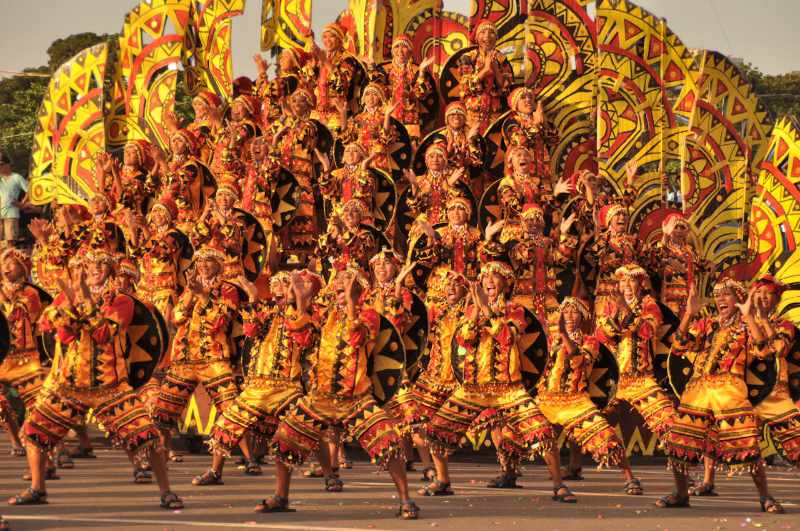
The quickest way to stop feeling like a visitor here is to attend one of the big Filipino festivals — not as a spectator behind a rope, but in the street with everyone else. Each one belongs to a specific city or province and celebrates something particular: a religious devotion, an indigenous heritage, a harvest, a season, or simply the decision to be cheerful after a hard year. They are regional rather than national, which is exactly what makes them worth travelling for. Here are the six that structure the calendar, and what to know before booking a flight to any of them.
On this page
01Regional, not national
This is the distinction that matters, and it is why these dates are not in any public holiday list. A festival here belongs to a city or a province. It closes streets in Cebu and changes nothing in the capital; it fills every hotel in Bacolod and passes unnoticed in Davao. Offices do not shut nationally, flights do not stop, and if you are not there, you will not know it happened.
That is the opposite of the country's solemn national pause, Holy Week, which stops everything everywhere. Between the two you have the whole texture of the Philippine year: one week when the nation falls silent, and half a dozen weekends when individual regions are as loud as they know how to be.
02The six, at a glance
| Festival | Where | When | What it celebrates |
|---|---|---|---|
| Sinulog | Cebu City | Third Sunday of January | The Santo Niño — devotion, street dancing, processions |
| Ati-Atihan | Kalibo, Aklan | January | The Ati people and the Malay arrival — drums, painted faces |
| Panagbenga | Baguio City | February, month-long | Flowers, in the country's cool-climate city |
| Pahiyas | Lucban, Quezon | 15 May | The harvest — houses decorated with rice, fruit and vegetables |
| Kadayawan | Davao City | August, week-long | Indigenous cultures and the harvest of the south |
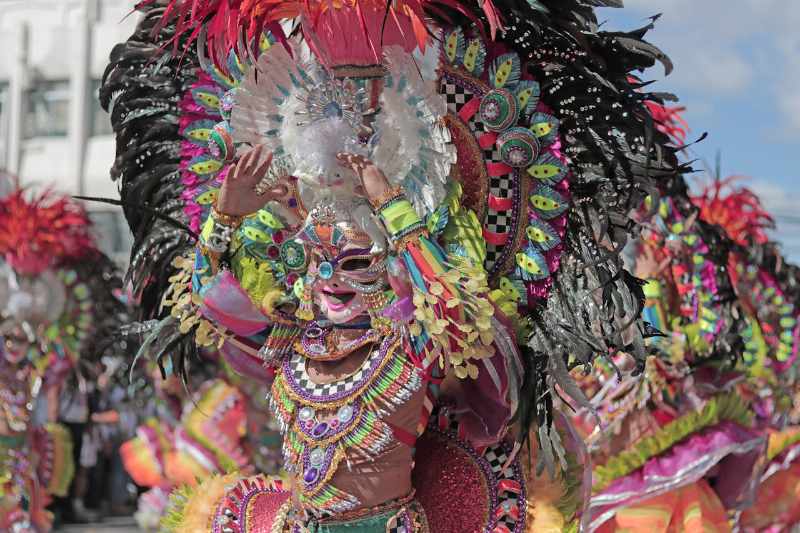
| MassKara | Bacolod City | October | Masks, dancing and deliberate good cheer |
Two land in January, which makes the start of the year the densest festival season; the rest are spread across the calendar, so with a little planning you can see three or four in a year without taking much leave.
03January: Sinulog and Ati-Atihan
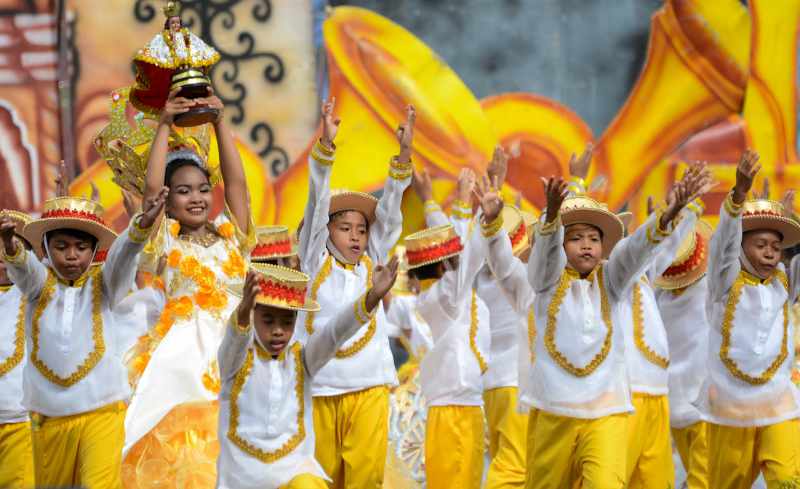
Sinulog, in Cebu City on the third Sunday of January, is the largest and the best known. It honours the Santo Niño, the Holy Child, and combines a grand parade, street dancing and religious processions; the traditional step mimics the current of a river, danced in bright costume to relentless drums. It is devotional and euphoric at the same time, which takes most foreigners a while to reconcile. If you are anywhere near Cebu in January, this is the one to see.
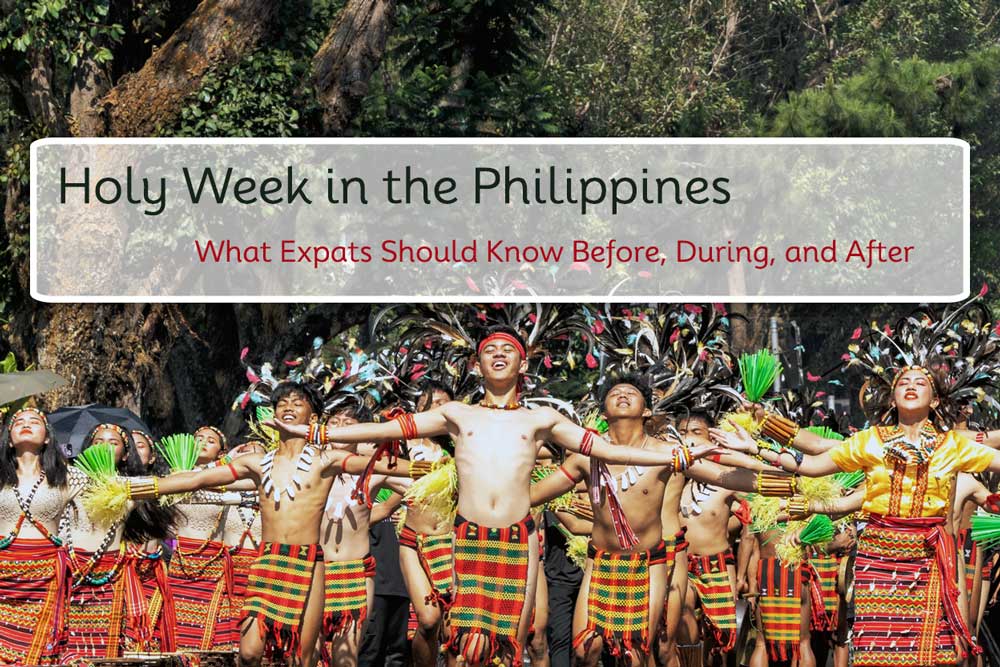
Ati-Atihan, in Kalibo in the province of Aklan, is held in the same month and is often called the mother of all Philippine festivals. It honours the indigenous Ati people and the arrival of Malay ancestors; participants paint their faces, wear traditional dress and dance to drums for days. It is less polished than Sinulog and considerably more participatory — the crowd is not watching the parade, it is in it.
Book in October, not in January
Both festivals fill their cities completely. Flights and hotels in Cebu and Kalibo are taken months ahead, and prices rise accordingly. If January is your target, treat it like a national holiday period for booking purposes even though it is not one.
04February to October: four more
Panagbenga takes over Baguio for the whole of February. The city sits high enough to be genuinely cool, which is why it can carry a flower festival: float parades, street dancing, pageants, food stalls and local produce across a month rather than a weekend. For families in the capital it is the easiest of the six to reach, and the most comfortable climate to spend a day walking in.
Pahiyas, on 15 May in Lucban, Quezon, is the most photographed and the most particular. Households decorate their facades with rice, fruit and vegetables, and above all with kiping — brightly coloured rice wafers hung in fans and garlands. It is a harvest thanksgiving and a competition between neighbours, and it is the clearest illustration you will find of bayanihan, the local ethic of communal cooperation.
Kadayawan runs for a week in Davao every August, celebrating the indigenous peoples of the south, their cultures and the harvest. Street dancing, float parades and craft markets, with the region's produce — durian included, whether or not you are ready for it — at the centre of the week.
MassKara closes the year's festival calendar in Bacolod each October: masks, dancing and organised cheerfulness. It was created in the 1980s to lift spirits after a period of hardship, which is worth knowing while you watch it — the smiling masks are not decoration, they are the point.
05Going, without getting it wrong
Five practical rules, learned mostly from clients who did the opposite.
- Confirm the date with the host city. Only Pahiyas is fixed to a calendar date. The others are announced annually, and programmes shift.
- Book flights and rooms months ahead. These cities fill entirely; last-minute means expensive or impossible.
- Remember what is being celebrated. Several of these are religious before they are festive. Photograph people after asking, not through them.
- Go with children early in the day. Parades start calm and end crowded; the morning is the family window.
- Accept the food you are offered. At Pahiyas especially, hospitality is the substance of the day, not a side attraction.
The wider point is that the country you have moved to is not the district you live in. Households who spend their first year inside one business district and their second discovering the provinces almost always say they should have reversed the order. Getting out early — to a festival, to a province, to a city that is not the capital — is what our orientation service in the Philippines is for, and it is the cheapest possible investment in settling well.
If you are still at the stage of choosing where to live, work and enrol children, our relocation team in the Philippines handles the whole arrival — and we have been telling arrivals to book Sinulog since 2011.
06Common questions
Are these festivals public holidays in the Philippines?
No. They are regional celebrations, not national holidays: offices elsewhere in the country stay open, and only the host city and its province change rhythm. Local government units sometimes declare a local holiday for the main day, which affects that city alone.
Which Filipean festival should I see first?
Sinulog in Cebu, if the January date works — it is the largest and the most complete introduction, combining devotion, parade and street dancing. If you are based in the capital and would rather not fly, Panagbenga in Baguio is the easiest to reach and runs for a whole month.
How far ahead should I book for the Filipean festivals?
Months. These cities fill completely: flights and hotels in Cebu, Kalibo, Bacolod and Baguio are taken well in advance and prices rise as the dates approach. Treat the booking like a peak holiday period even though the country as a whole is working normally.
Are Filipean festivals suitable for children?
Yes, with timing. Parades begin calm and become very crowded and very loud by the afternoon, so the morning is the family window. Pahiyas, which is a village-scale event built around decorated houses and food, is the gentlest of the six.
What is kiping?
A brightly coloured wafer made from rice paste, hung in fans and garlands on house facades during Pahiyas in Lucban. It is edible, it is the signature of that festival, and the arrangements are a genuine competition between neighbouring households.
Is it respectful for a foreigner to join in Filipean Festivals?
Entirely — participation is welcomed, and at Ati-Atihan it is more or less the point. The one caution is that several of these festivals are religious devotions before they are parties: follow the crowd's lead, ask before photographing people closely, and treat processions as ceremonies rather than shows.
New here and want to see the country properly?
Tell us where you are based and what your household enjoys. We will point you at the festivals worth the flight, the ones you can reach in a weekend, and what to book before the dates are announced. Talk to our Philippines team →