Retiring in the Philippines: What to Plan Before the Visa
The visa is the part everyone researches first, and it is rarely what goes wrong. Housing signed too fast, healthcare left vague, a container full of things that should have been sold — those are what shape a retirement abroad.

We have moved enough retired couples into the Philippines to know where the difficulty actually sits, and it is not where people expect. Retiring in the Philippines is unusually accessible — the retiree visa opens at 40, which almost no other country matches, and English is spoken nationwide. So the visa gets solved. What catches people is everything around it: a lease signed in the first fortnight because the hotel was expensive, a healthcare plan assumed rather than checked, a shipment of furniture that costs more to import than to replace. This guide covers that half of the move, in the order the decisions actually arrive.
On this page
01What changes, beyond the address
Retiring abroad is not moving house. You are relocating a legal status, a healthcare arrangement, a banking setup and a set of daily habits at the same time — and unlike a career move, there is no employer absorbing any of it. Five things all have to land, and they are interdependent:
- A residence status that fits your age, your income structure and your family situation.
- Evidence of income or a deposit, depending on which route you take — and the two are not interchangeable.
- Customs clearance for whatever you decide to bring, which is a decision before it is a formality.
- Housing, under a contract written in a market whose norms you do not yet know.
- Local registrations, banking and insurance — the unglamorous layer that determines whether month three is calm or frantic.
The interdependence is the part worth internalising. Your status determines your banking options; your banking determines how you pay a deposit; your housing choice determines which hospital is realistically yours. Decided in the wrong order, each one constrains the next.
02The status question, settled early
Three routes cover almost every retired couple arriving here, and which one applies is a matter of fact rather than preference.
| Your situation | The route | What it turns on |
|---|---|---|
| Retired or semi-retired, aged 40 or over | The retiree visa, administered by the Philippine Retirement Authority | A bank deposit, whose size depends on whether you can evidence a pension |
| Married to a Filipino citizen | The 13A, by marriage | The marriage itself — permanent residence, reached through several administrative stages and interviews |
| Still working remotely, part of the year | The remote-work route | Foreign income and its own compliance and tax consequences |
The retiree route is the one that makes the Philippines unusual, because it opens at 40 rather than 50 or 60 — and it was lowered to 40 only recently. What that means for the deposit, the three tracks and the timeline is set out in our guide to the SRRV age reform. Read it before you fix a budget, because the pension question alone can halve the amount you have to place.
⚠ Beware the shortcut offered to you
Anyone promising to accelerate a visa through a personal contact is offering you a problem, not a service. The routes above involve a retirement authority, an immigration bureau and accredited banks, and none of them is bypassed by a fixer. A rejected or irregular file is far more expensive than a slow one.

03Where to live, and why not to rush
The single most common regret we hear is a housing decision taken in the first two weeks, from a hotel, under time pressure. It is understandable and it is expensive.
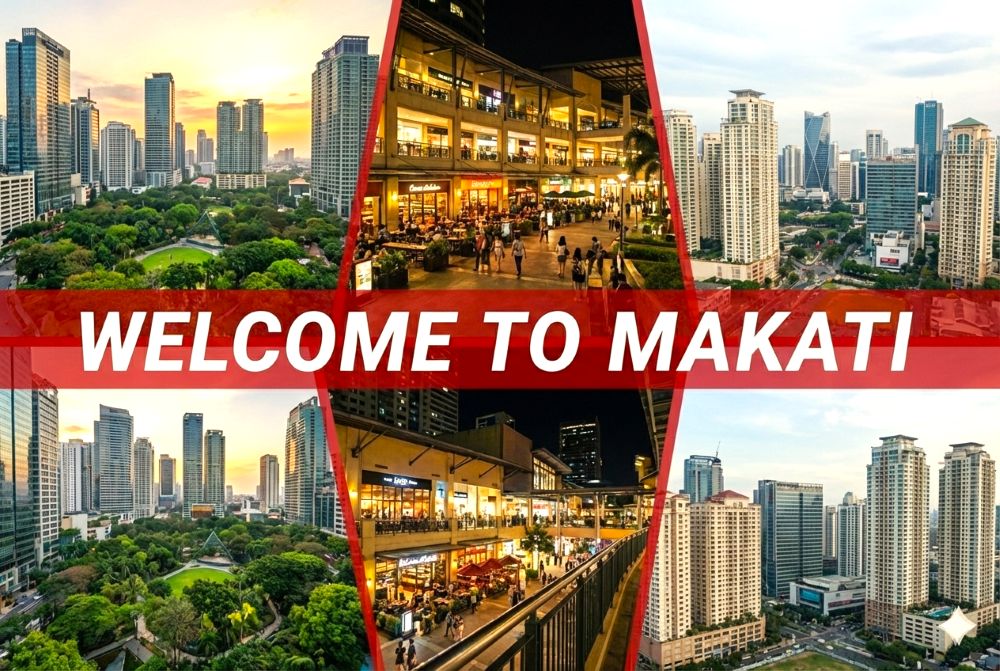
The country offers genuinely different lives. The capital's business districts give you the deepest choice of international healthcare and the highest costs. Cebu sits in between, city and coast within reach of each other. Smaller provincial cities are markedly cheaper and quieter, at the price of specialist medicine being a flight away rather than a drive. For a retired household, that last trade-off is not a lifestyle preference — it is the most consequential decision in the move.
Three habits are worth adopting. Rent before you buy, for at least a year, in the area you think you want. Choose around healthcare, not around the view: identify the hospital you would actually use in an emergency and work outwards from it. And have the contract read before you sign — deposit terms, what the association dues cover, who is liable for what. Our Philippines property search service exists largely because unverified listings and foreigner pricing are real, and both are hard to detect from abroad.
Tom and Liza, retired couple from Canada
“We were ready to move but didn't realize how much paperwork was involved. Our relocation consultant took care of everything — from our SRRV to opening a local bank account. It made all the difference.”
04The five mistakes that cost most
These are not hypothetical. Each one is something we have been called in to unwind, and all five are cheap to avoid and expensive to fix.
01
Committing to property too early
Without local insight, retirees overpay or miss terms buried in a contract. A year of renting costs a fraction of a purchase made in the wrong district.
02
Leaving healthcare vague
Which hospitals, which insurance network, what happens at 3am. This is the one that turns from an administrative gap into an emergency, and age raises the premium every year you delay.
03
Shipping too much
Some goods carry heavy duty, and some simply do not work here — electronics on a different standard, furniture that suits neither the climate nor the room sizes. Decide what to sell before you decide what to ship.
04
Choosing cheap over insured
Low-cost movers routinely skip insurance. On a lifetime's possessions, an uninsured shipment is not a saving, it is an unhedged bet.
05
Underestimating the bureaucracy
Even a straightforward application takes months when documents have to be authenticated abroad and three institutions have to be coordinated. Build the calendar backwards from your arrival, not forwards from your decision.
Underneath all five sits the same error: budgeting for the visible costs. The deposit, the flights and the shipping are easy to price. Insurance premiums at your age, association dues, import duty and the first year's double-running costs are the ones that break a plan — and we set out the real ranges in our guide to the hidden costs of relocating to Southeast Asia.

05What a local partner is actually for
Not to make institutions move faster — nobody does that. The value is narrower and more honest than most brochures suggest, and it is worth stating plainly so you can judge whether you need it.
It is verification: a listing that exists, a landlord who owns the property, a mover who carries insurance. It is sequence: knowing that the police certificate expires while the rest of the file is assembled, so it is not obtained first. It is coordination between institutions that do not talk to each other. And for a retired couple specifically, it is not having to become an expert in a bureaucracy you will use once.
Concretely, four situations account for most of the harm we are asked to undo, and retirees are the group they target hardest — arriving with capital, without local networks, and on a timetable:
- Listings that do not exist, or belong to someone other than the person showing them to you. Deposits paid on these are rarely recovered.
- Fixers selling visa shortcuts. What you buy is an irregular file, and the cost lands years later.
- Foreigner pricing on rent, services and repairs — hard to detect without a local reference point for what things cost.
- Insurance and healthcare cover assumed rather than read. The gap is discovered at the worst possible moment, which is the definition of the risk.
There is a human half too, and it matters more than we expected when we started. Many of these moves have a story behind them — a Filipino spouse returning home after decades abroad, a partner embracing the other's country. Orientation, introductions to a retiree community, someone to call when something unexpected happens: none of it appears on an invoice, and it is what turns an address into a home. Our Philippines destination services team has been on the ground since 2011, with offices in Vietnam and Thailand as well, which matters if the Philippines turns out to be one chapter rather than the last one.
06Common questions
How old do I have to be to retire in the Philippines?
Forty. The retiree visa administered by the Philippine Retirement Authority opens at 40, which is unusually low by international standards and was reduced from 50 only recently. Couples married to a Filipino citizen have a separate route that does not depend on age at all.
Which route fits a mixed-nationality couple in the Philippines?
Usually the 13A, by marriage to a Filipino citizen, which leads to permanent residence through several administrative stages and interviews. It rests on the marriage rather than on a deposit, so it suits couples who would rather not immobilise capital — but it takes longer.
Should I rent or buy in the Philippines?
Rent for at least the first year, in the area you think you want. The most common regret we hear is a purchase or a long lease committed to within the first fortnight, from a hotel, under time pressure — before knowing which district, which hospital and which commute actually suit you.
Should I ship my furniture to Philippines?
Less of it than you think. Some goods carry heavy import duty, and some are simply unsuited — electronics on a different electrical standard, furniture scaled for different rooms and a different climate. Decide what to sell before deciding what to ship, and insure whatever travels.
Can I get help if I am only semi-retired?
Yes, and it is increasingly the norm. Many arrivals combine remote work or consulting with a new life abroad, which changes the status question — the remote-work route has its own compliance and tax consequences that a pure retiree route does not.
How far ahead should I start to retired in the Philippines?
Several months. Documents issued abroad need authenticating in their country of origin, three institutions have to be coordinated, and some certificates expire while the rest of the file is assembled. Build the calendar backwards from your intended arrival rather than forwards from your decision.
Planning a retirement in the Philippines?
Tell us your ages, your income structure and roughly when you want to arrive. We will set out the route that applies, the sequence, and what to decide before you commit to anything. Talk to our Philippines team →