Moving from Vietnam to Australia
A quieter rhythm, more space, and an immigration system that rewards preparation. Here is what a family actually has to settle first.

Moving from Vietnam to Australia changes more than an address. It changes the pace of the week: more outdoor time, more distance between things, longer daylight in summer and a genuine winter in the south. Families make the move for work, for schooling, or simply for room to breathe — and the ones who arrive well are the ones who treated the paperwork as the project it is. This guide covers the household side of the corridor, from the visa to the school run, and the part we run ourselves: an overseas household shipment out of Vietnam.
On this page
01Why families choose Australia
The reasons people give us are remarkably consistent: stable law and predictable administration, a strong public school system, healthcare that works, safe streets, and physical space. None of that is exotic, and that is rather the point — families moving with children are not looking for adventure, they are looking for a place where the ordinary things are reliable.
On the practical side, Australia continues to draw skilled workers, particularly in care work, in the trades and in technology. The immigration system is explicit about what it wants, which makes it demanding but also readable: you can find out whether you qualify before you commit, which is not true everywhere. If you are still comparing destinations rather than planning one, our review of the best expat destinations for 2026 sets Australia against the alternatives on income, tax and the cost of living.
02The visa, and how to read the list
Everything else waits on this. Australia runs a long catalogue of visas — skilled, employer-sponsored, family, student, business — each with its own criteria, its own processing time and its own conditions once granted. The full list, with the eligibility rules for each, is published by the Department of Home Affairs on its official visa finder. Start there rather than with a forum, because the conditions attached to a visa — whether your partner may work, whether the children pay school fees — shape the family budget more than the application fee does.
Two things regularly extend the timeline. Skills assessments, for occupations that require one, involve a separate body and their own evidence. And English language testing, where required, is booked weeks ahead. Neither is difficult; both are slow if started late.
⚠ Book the freight after the grant, not before
A visa in progress is not a date. We have seen families pay to store a shipment at an Australian port because the container was booked against an expected decision rather than a granted one.
03Paperwork on two sides at once

An outbound move is governed by two administrations that do not talk to each other. Gather early, and gather in both directions.
- Identity and civil records. Passports, birth and marriage certificates, translated and notarised where an Australian body will need to read them.
- Employment and study evidence. Contracts, references, diplomas and transcripts — the file a skills assessment runs on.
- School and medical files. Reports, transfer certificates and vaccination records. Australian schools ask for these at enrolment, not later.
- Banking papers. Statements and proof of source of funds, which make opening an Australian account far quicker.
- Health checks and police certificates, both standard requirements on the Australian side.
On the Vietnamese side there is one step foreign nationals frequently miss: depending on your status and your residence documents, leaving may require an exit and re-entry permit before departure. It is administrative rather than difficult, but it is not something to discover at the airport.
04Where you land, and what it costs
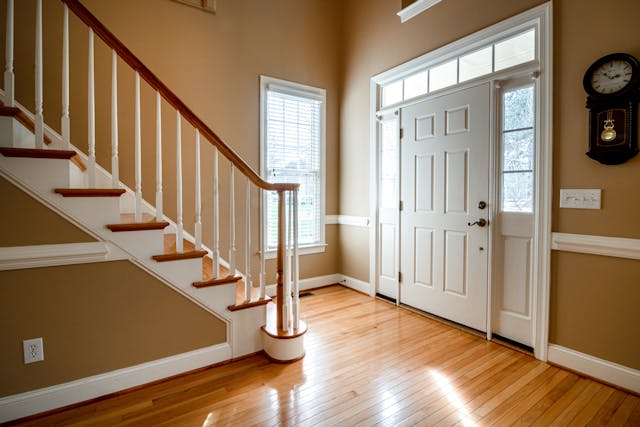
Housing shapes the first year more than any other decision, and Australian cities differ from one another far more than outsiders expect. Sydney has the deepest job market in finance, technology and trade, and the rents to match — it is consistently the most expensive place to land. Melbourne offers a comparable hiring market and stronger public transport at a lower rent. Brisbane, Adelaide and Perth change the arithmetic again, and within any of them the gap between a central apartment and a suburb forty minutes out is larger than the gap between two cities.
⚠ Treat every published cost figure with suspicion — including ours
You will find monthly household budgets for Australia published all over the internet. We removed a set of them from an earlier version of this guide for a simple reason: the components did not add up to the totals they were attached to. We have not replaced them, because no authority we can cite publishes rent levels by city — only price movements. Get your figure from current listings in the specific suburbs you are considering, on the dates you are considering them. That number is real; a national average is not.
The pattern that works is unglamorous. Take short-stay accommodation for the first few weeks, use that time to learn the commute, visit the schools and walk the neighbourhoods at different hours, then sign a long lease. Australian leases are typically twelve months and are not easy to exit early, so the six weeks you spend choosing well are the cheapest six weeks of the whole move.
05What ships, and what the border refuses
Australia is stricter than almost anywhere else about what crosses its border, and it is strict for a reason: an island continent protects an agriculture and an ecology that have no natural defences. Wooden objects, cane and bamboo, anything with soil on it, plant material, seeds, feathers, untreated hides — all attract scrutiny, and some of it is common in a Vietnamese household. Garden tools, outdoor furniture and children's bicycles are cleaned before they are packed, not after they are inspected.
Beyond biosecurity, the Australian Border Force maintains its own list of prohibited and restricted goods, with written permission required for a number of categories. The consequences are not nominal: goods can be seized, and the ABF states that importing or exporting prohibited goods without the relevant permission can attract penalties of up to 2,500 penalty units or ten years' imprisonment. The categories and the permission process are set out on the Australian Border Force prohibited goods page. Biosecurity, handled by the agriculture department, is a separate regime again.
In practice this changes the survey rather than the shipment. We flag the items that will be inspected, clean or treat what can be treated, declare everything that must be declared, and leave behind the handful of things that are simply not worth the risk. A shipment that is declared honestly is inspected and released. A shipment that is not is the one that generates the story.
06Healthcare and schooling
Australia's public health system, Medicare, covers visits to general practitioners and treatment in public hospitals for those entitled to it. Many expatriate families add private cover on top, which buys access to private clinics and shortens the wait for specialists. Whether you are entitled to Medicare at all depends on your visa, which is one more reason to read the conditions attached to it before you celebrate the grant.
Schooling follows a national structure from the early years to university, with a well-established public system and a private sector that often provides more language support and smaller classes — the deciding factor for children arriving without fluent English. Enrolment is done locally and asks for the school records you gathered in Vietnam, so the file matters more than the choice of city.
| Decision | What it turns on |
|---|---|
| Public or private school | Language support and class size, more than academic results |
| Medicare alone, or private cover too | Your visa entitlement, and how long you are prepared to wait for a specialist |
| City | The job market first, the commute second, the rent third |
| Suburb | School catchment and transport — in that order, once children are involved |
07The weather, and the first six months
Australia is not one climate. Queensland and the north are warm and humid, and feel close to home for anyone arriving from Ho Chi Minh City. Melbourne and Hobart have real winters, and the surprise is not the temperature but the housing: Australian homes are often less insulated than visitors expect, and heating is a line on the bill that Vietnamese families have never had to budget for. Sun protection runs the other way — the ultraviolet index is high, and it is treated as a public health matter rather than a personal preference.
The adjustment itself follows a familiar curve. The first month is logistics and everything feels solvable. The third is the difficult one, once the novelty has gone and the absence of family and familiar food becomes concrete. What shortens it is routine: a regular market, a doctor, a sport, a Vietnamese community group, and school gates where the same faces appear every morning. None of it can be arranged in advance, and all of it can be started in week two.
08Common questions
Which visa do I need to move from Vietnam to Australia?
It depends on why you are going. Australia runs skilled, employer-sponsored, family, student and business routes, each with its own criteria and processing time. The Department of Home Affairs publishes the full list with eligibility rules for each, and that is the only reliable place to start.
How much does it cost to live in Australia?
Enough that the answer has to be local. Rent dominates the budget and varies sharply between cities and between suburbs of the same city — Sydney is consistently the most expensive, Melbourne lower for a comparable job market. We deliberately publish no figure here: no authority we can cite publishes rent levels by city, and the averages circulating online do not survive checking. Price the specific suburbs you are considering, from current listings.
What cannot I bring into Australia?
Australia applies strict biosecurity controls on wooden items, plant material, seeds, soil, feathers and untreated animal products, and the Border Force maintains a separate list of prohibited and restricted goods. Penalties for importing prohibited goods without permission run to 2,500 penalty units or ten years' imprisonment. Declare everything and clean anything that has been outdoors.
Do I need a permit to leave Vietnam?
Depending on your status and your residence documents, an exit and re-entry permit may be required before departure. It is administrative rather than difficult, but it has to be arranged in advance — not discovered at the airport on the day.
Will my family have access to Medicare?
Medicare covers general practitioner visits and public hospital treatment for those entitled to it, and entitlement depends on your visa. Many expatriate families add private cover to reach private clinics and shorten specialist waiting times. Check the health conditions attached to your specific visa before you budget.
Should I rent before I arrive?
Rarely. Australian leases usually run twelve months and are hard to exit early, so the safer pattern is short-stay accommodation for the first few weeks while you learn the commute, visit the schools and walk the neighbourhoods, then commit to a long lease.
The move itself — the survey, export packing, the customs file on the Vietnamese side, insurance priced against a valued inventory, and storage if your two homes do not overlap — is set out on our Vietnam moving services page.
Planning a move to Australia?
Send us your departure window, your destination city and roughly what is moving. You will get a survey, a volume assessment you can check, an itemised quotation, and a frank list of what Australian biosecurity is likely to stop. Talk to our Vietnam team →